
when we speak we are afraid
our words will not be heard
nor welcomed
but when we are silent
we are still afraid
So it is better to speak
Audre Lorde. from Litany for SurvivalCourage in the Face of Fear
Social Justice Elders on the Importance of Speaking Out
Courage in the Face of Fear is a statewide virtual conversation with social justice elders Loretta Ross, Suzanne Pharr, and Shea Howell about how fear keeps people silent and how we might instead move toward courage, connection, and action.
Hosted in partnership with the National Council of Elders, with support from the Idaho Community Foundation, the event took place on August 20, 2026. But we continue to invite Idahoans to learn from these longtime movement leaders through the resources on the page—including a full recording of the webinar—and explore what it means to speak and act for human dignity, even when doing so feels risky.
-
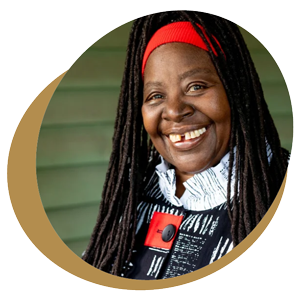
Loretta J. Ross
-
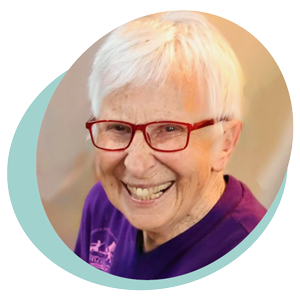
Suzanne Pharr
-
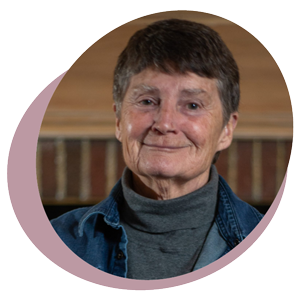
Shea Howell
Loretta J. Ross
Loretta Ross is an activist, professor, public intellectual, MacArthur Fellow, and cofounder of both the National Center for Human Rights Education and the SisterSong Women of Color Reproductive Justice Collective. She is currently an associate professor at Smith College.
→ Learn more about Loretta Ross
→ Read about the Calling In framework
→ Join the September 2026 Calling In training series
Loretta RossInsights on Courage
⏵ Courage is not the absence of fear. Those engaged in difficult justice work should not expect to become fearless. Rather, the aim is to act faithfully despite fear.
⏵ Find the humanizing doorway into a difficult conversation. Sometimes it’s food—“grits as a love language”—or music, family, children, or a shared place. Relationship often precedes persuasion.
⏵ Lead with love, then call people to their better selves. Ross told the story of her uncle’s offensive language at family events. Instead of condemning him, she reminded him of the generous man she knew him to be, and asked him to reconcile that person with what he was saying. She called him on to become the person he was capable of being.
⏵ Coalitions do not require total agreement. “Do together what you cannot do alone.” Meaningful cooperation is possible without ideological conformity.
⏵ Start locally. When asked how Idaho could obtain national help, Ross reversed the premise: first consolidate the people, institutions and relationships already present. Local churches, civic groups, neighbors, associations, nonprofits can become pathways to broader networks. National strength often begins as organized local strength.
⏵ Approach difference with curiosity. Difference itself can be enriching. Instead of only seeking common ground, ask: Why do you think that? What experience brought you here? Confidence in your own convictions should make curiosity easier.
⏵ Joy is an organizing strategy. People already know how to feel afraid, overwhelmed, and miserable, and a movement offering only despair won’t grow. Belonging, laughter, friendship, and purpose sustain courageous action: “We’ve got to make the revolution irresistible.”
Your silence will not protect you.
Loretta Ross“
Suzanne Pharr
Suzanne Pharr is a southern queer feminist, anti-racist organizer, political strategist, and former director of the Highlander Center. She has spent decades working to build broad-based movements for social and economic justice.
→ Learn more about Suzanne Pharr
→ Download Homophobia: A Weapon of Sexism free
Suzanne PharrInsights on Courage
⏵ Personal vulnerability can become collective power. The women’s movement demonstrated that experiences people were taught to hide could become catalysts for profound social change when spoken aloud. Truth becomes power when it is witnessed and connected to the truths of others.
⏵ The collective makes people braver than they can be alone. People discover strength when they tell their stories and hear others say, ‘me too.’ A personal experience becomes a shared condition; a shared condition becomes organizing; organizing becomes institutional change.
⏵ Practice courage. Courage is a skill strengthened through repetition. Begin with someone who loves you and is reasonably receptive. Say the difficult thing. Then take another step. Do not mistake the first act for the work itself.
Insights on Rural Organizing
Written By Suzanne PharrIn rural communities the person you disagree with may be your neighbor, your nurse, your client.
This is the hardest question we have had today. It’s the place where we have to deal often with both anger and fear with people whose relationship we don’t want to lose.
Attitude and composure are critically important. Here are a few examples of what to avoid:
Assuming you know exactly what your person thinks and is going to say.
Giving too little time to a conversation that could have serious consequences.
Failing to understand and acknowledge the good qualities of the other person.
Speaking your emotions instead of your reasoning,
Failing to listen without interruption.
What might help you to avoid relationship destruction:
Present your position from a place of openness, not righteousness.
Acknowledge ideas/activities you share together beyond what you are disagreeing about.
Ask questions about how this person came to her/his position or belief.
Be clear about your desire to understand their thinking and for them to understand yours.
Remember the tornadoes. Every time a tornado hits a small town in Arkansas, the whole town turns out to help rescue people, comfort each other, pick up the pieces of their houses, find their pets, and stand with each other. Remember that we hold a common humanity and it is worth working hard for, taking risks for, and never giving up.
“
Shea Howell
Shea Howell is a longtime Detroit activist, writer, educator, cofounder of the Boggs Center and Riverwise Magazine, and professor emerita of communication at Oakland University. Learn more about Shea Howell at:
→ Thinking for Ourselves weekly column
Shea HowellInsights on Courage
⏵ Start with one other person. The first act of courage need not be a speech, protest, or public declaration. Write the truth privately first. Then tell one person you trust, and now there are two people in the world who know that truth.
⏵ Give people room to change their minds. Changing one’s mind can involve a loss of face, community, or identity. Successful movements need doors where people can enter, rather than ideological checkpoints.
⏵ Remember that you have changed your mind, too. Most people have revised deeply held convictions because of relationships, information, and experience. Remembering our own evolution can make us more patient with others’.
⏵ Know your bottom lines—but abandon all-or-nothing politics. There are certain principles connected to one’s own humanity that should not be surrendered. But beyond those, just because you cannot get everything, doesn’t mean you should get nothing. Make authentic progress where collaboration is possible.
We don’t think of courage as imagination: thinking of what we haven’t thought of before.
Shea Howell“
Courage becomes sustainable when it stops being solitary.
Fear may remain. Disagreement may remain. Risk certainly remains. But when people tell the truth to one another, build relationships, practice speaking, create together, tolerate some disagreement, rediscover joy and take the next step together, fear loses some of its power.
You do not first become courageous and then join the work.
You become courageous by doing the work with other people.